
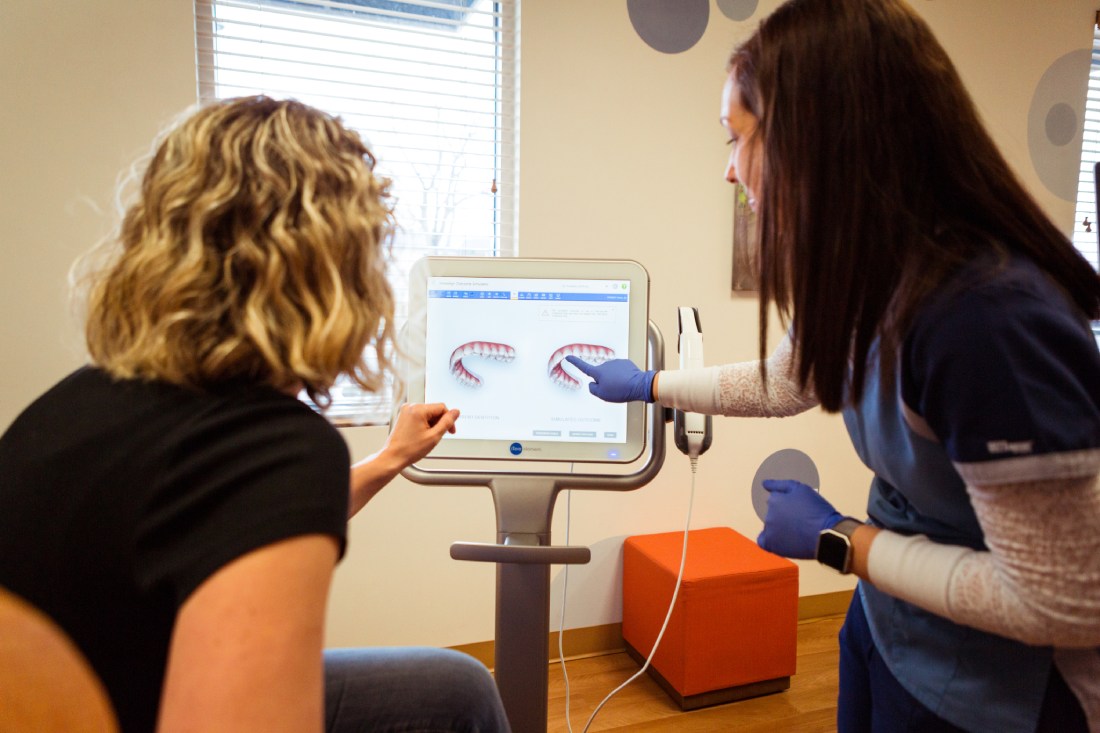
3M Digital Bonding is a way of placing braces where Dr. Franklin plans each bracket’s position on a 3D scan of your teeth, then transfers all the brackets at once using a custom tray. The result: more accurate placement and shorter appointments.
If you have friends or family who had braces years ago, you may picture a long appointment with brackets glued on one at a time, followed by repositioning visits. Digital bonding changes that first step. At Franklin Orthodontics in Chambersburg, it is part of how we start every braces case, and it is one of the reasons patients tell us getting braces was easier than they expected.
How Were Braces Traditionally Placed?
One bracket at a time
With traditional placement, the orthodontist positions each bracket by hand in the chair, judging its height and angle by eye. It works, but it relies entirely on what can be seen in the moment with a patient sitting back in the chair.
Why small differences matter
A bracket that sits slightly off its ideal position will push a tooth slightly off course. Those small differences can mean extra wire bends or bracket repositioning later. Getting placement right at the start saves work for the rest of treatment.
How Does 3M Digital Bonding Work?
Our technology page describes the process in three steps. Here is what each one means for you.
Step 1: A digital scan
We scan your teeth with the iTero scanner, a small wand that captures a high-resolution 3D image in minutes. There are no impression trays and no putty.
Step 2: Digital bracket planning
Using 3M’s software, Dr. Franklin designs your bracket placement on the 3D model, based on your unique tooth anatomy and treatment goals. She can rotate the model, check each tooth from every angle and set each bracket exactly where it needs to go.
Step 3: A custom transfer tray
A custom tray is made that holds every bracket in its planned position. At your bonding appointment, the tray places the brackets on your teeth in the right positions, all at once.
What Are the Benefits for Patients?
More accurate bracket placement
Brackets planned on a 3D model land where they were designed to go. More accurate placement leads to more efficient tooth movement.
Shorter appointments
Because the brackets go on together, the bonding visit is more streamlined. That is good news for kids who find it hard to sit still and for adults fitting appointments around work.
Fewer adjustments
When brackets start in the right place, there is less need to reposition them later. Our technology page notes shorter appointment times and fewer adjustments as key benefits.
A more comfortable start
Less time with your mouth open in the chair makes for a more comfortable first day. Patients frequently tell us the start was easier than they expected.
How Does Digital Bonding Compare With Traditional Placement?
| Step | Traditional placement | 3M Digital Bonding |
|---|---|---|
| — | — | — |
| Records | Impressions or photos | iTero 3D digital scan |
| Planning | Judged by eye in the chair | Planned on a 3D model in software |
| Placement | One bracket at a time | All brackets at once with a custom tray |
| Appointment length | Longer bonding visit | Shorter, streamlined visit |
| Later repositioning | More likely | Less likely |
Who Can Get Digitally Bonded Braces?
Metal and clear ceramic braces
Digital bonding works with both types of braces we offer: traditional metal and clear ceramic. You choose the look; the placement method stays the same.
Kids, teens and adults
Every age group benefits. For teens, a shorter first appointment makes a good first impression. For adults, fewer visits help treatment fit a busy schedule.
What Should You Expect on Bonding Day?
Before the appointment
Brush and floss well that morning and eat a normal meal, since your teeth may feel tender for a few days afterward.
During the appointment
Your teeth are cleaned and prepared, the custom tray is seated, and the brackets are bonded in place. The wire is then added and the team shows you how to care for your new braces.
The first few days
Some pressure and tenderness is normal as your teeth begin moving. Soft foods and an over-the-counter pain reliever, if appropriate for you, usually help. The team will give you care instructions to take home.
Why Did Dr. Franklin Choose Digital Planning?
A background in 3D imaging
Dr. Franklin earned her orthodontic specialty certificate and a master’s degree in oral biology at Temple University Kornberg School of Dental Medicine, where her residency research focused on 3D imaging and facial esthetics. Planning brackets on a 3D model is a natural extension of that training: it lets her study each tooth’s shape and angle in detail before anything is placed.
Better outcomes in less time
Our technology page sums up the goal: by combining clinical expertise with advanced tools, we aim for better outcomes in less time and with fewer visits. For families driving in from Shippensburg, Greencastle or Waynesboro, fewer visits is a real benefit.
Part of a digital workflow
Digital bonding sits alongside the rest of our digital tools. The same iTero scan used to plan your brackets can be used for diagnostic records and progress tracking during treatment, so your records stay accurate and easy to compare from start to finish.
Is Digital Bonding Different From Indirect Bonding?
You may hear the term indirect bonding. It describes the same basic idea: brackets are positioned in advance on a model and then transferred to the teeth with a tray, rather than placed one at a time directly in the mouth. 3M Digital Bonding is a modern, fully digital version of that approach, planned on a 3D scan instead of a physical model.
Frequently Asked Questions
Does digital bonding hurt?
The bonding itself is not painful. Mild soreness in the first few days comes from teeth starting to move, which happens with any braces.
Is digital bonding used for clear aligners too?
No. Digital bonding is for braces. Clear aligners are also planned from an iTero scan, but they are removable trays rather than bonded brackets.
Does digital bonding make treatment faster?
More accurate placement leads to more efficient tooth movement and fewer adjustments. Your total treatment time still depends on your bite.
Do I need an extra appointment for the scan?
The iTero scan is often done at your consultation or records visit, so it fits into the appointments you already have.
See Digital Bonding in Person
Precise bracket placement is one of the ways we make braces easier from the very first day. Request a free consult at our Chambersburg office, and Dr. Franklin will show you your own 3D scan and explain how your braces would be planned.